BLACK SEA ECONOMIC COOPERATION

ðóñ>>

Appendix No. 1

DRAFT MEMORANDUM OF UNDERSTANDING

for the coordinated development of Black Sea Ring Highway

The Governments of member-countries of the Black Sea Economic Cooperation organization (BSÅC), hereinafter referred to as the Parties,

desiring to reinforce cooperation of countries of the Black Sea region in facilitating transport and trade being of great importance for the economic development,

acknowledging formidable difficulties in organizing international road traffic in the Black Sea region brought about by the lack of an adequate and well-developed road infrastructure round the Black Sea,

realizing a necessity of facilitating and developing the international road traffic in the Black Sea region,

believing that a coordinated plan of road construction and reconstruction is vital to building and extending ties among the EC, Black Sea and Asian countries, called upon to satisfy the requirements of the international communication in future,

emphasizing that the solution of common problems of coordinated development of the road infrastructure requires new and innovative approaches within the framework of the regional cooperation,

taking into account the joint Declaration of Transport Ministers of the BSÅC Member-Countries for the Co-ordination of the Black Sea Transport System and the TransEuropean Transport System within the Euroasian Transport Link signed on January 28, 2005 in Saloniki,

being aware that the technical and administrative coordination in developing transport ties among EC, Black Sea and Asian countries is the most important aspect of economic growth ensuring stable people and commodity mobility,

bearing in mind that the economic cooperation must meet the real needs and interests of the Parties,

taking into account that some measures may be realized only in the long-term outlook,

have made this Memorandum of Understanding (MoU) as an important step in the coordinated development of roads round the Black Sea on the basis of the Highway Ring Project “Black Sea Ring” (HWBSR).


Article 1. Purposes of MoU

  1. Strengthening the cooperation among the Parties in the harmonization of some key elements relating to the development and construction of an international road round the Black Sea in accordance with the agreements entered into on an international level and the related regulations and standards.

  2. Such cooperation will be primarily focused on the elaboration of policies including general principles and actions such as organizational, legislative and economic ones as well as means of their realization and follow-up.

  3. Main purposes of the HWBSR project are as follows:

a) rendering assistance to the Parties in speeding up the HWBSR construction by revealing investment requirements and priorities, searching of financial resources for the construction and creating appropriate recoupment systems in connection with the use of HWBSR;

b) rendering assistance in HWBSR design, construction, technical maintenance, operation and management in the territory of the Parties to the Project within the framework of the comprehensive European transport infrastructure, thus allowing the creation of missing elements in the existing highway network of the Black Sea region;

c) giving full attention, with due regard for the current economic difficulties, to modernization of the existing roads and planning of HWBSR phased construction;

d) contributing to cooperation among the countries and enhancement of its effectiveness in all matters of road transport development;

e) further dissemination in the region of knowledge, experience, know-how accumulated by now in EC countries.


Article 2. Main Features of HWBSR

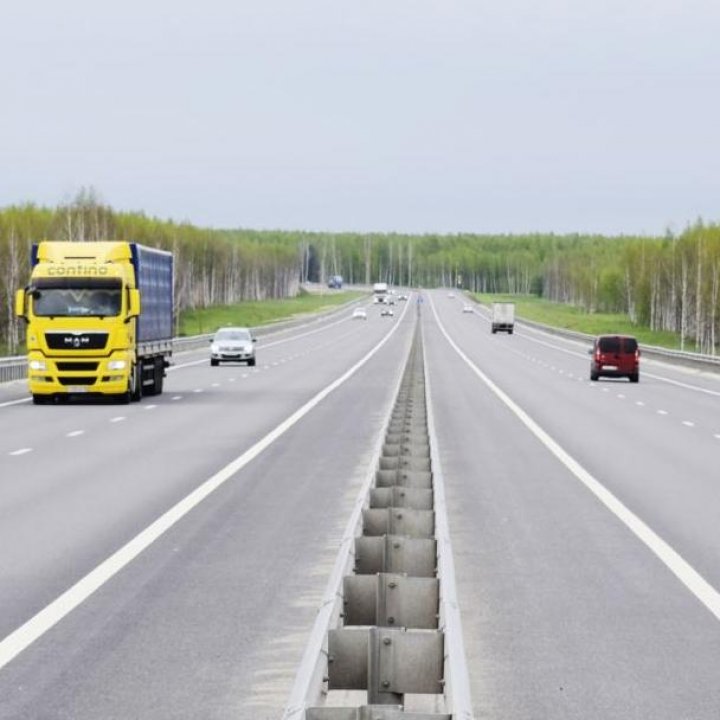
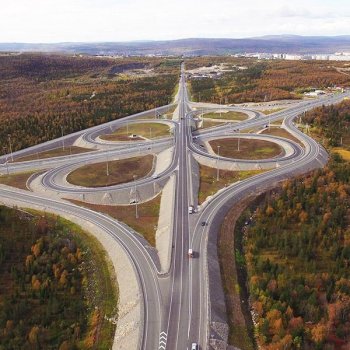
  1. HWBSR is a high capacity highway consisting of two physically separated thoroughfares each of which will have at least two lanes.
    It will provide for services of an adequate quality for up-to-date traffic ensuring safety, speed and comfort in accordance with the generally accepted standards and, thus, it will facilitate economic and social development of the entire European continent.

    The main features taken into account in construction or reconstruction of HWBSR must meet the requirements of the European Agreement on Main International Traffic Arteries (AGR) concluded in Geneva on November 15, 1975.

  2. The HWBSR length is about 7 140 km.
    The main route runs through the following cities:

    Istanbul (Turkey) – Samsun (Turkey) - Trabzon (Turkey) – Batumi (Georgia) – Poti (Georgia) – Novorossiisk (Russia) - Rostov-on-Don (Russia) – Taganrog (Russia) – Mariupol (Ukraine) – Melitopol (Ukraine) – Odessa (Ukraine) – Chisinau (Moldova) – Bucharest (Romania) – Khaskovo (Bulgaria) – Edirne (Turkey) – Istanbul (Turkey) and Komotini (Greece) – Alexandrupolis (Greece) – Istanbul (Turkey).

    A list of HWBSR links, including the main route description, is given in Appendix I.


Article 3. Organizational Measures to Realize the HWBR Project

  1. A policy-making authority of HWBSR is the Steering Committee holding its sessions twice a year. It shapes the HWBSR development policy as well as general measures to be realized in connection with the realization of the HWBSR Project and takes decisions on general actions and programmes in regard to the HWBSR Project.

  2. The Steering Committee will include one representative from each Party-signatory. Each Party shall appoint one representative and one alternative representative. All Parties shall be notified of such appointments. The Steering Committee shall take its decisions by consensus following the rules of procedure. The Parties shall preside in the Steering Committee in turn with an annual rotation in alphabetical order.

  3. Representatives of BSÅC observers, BSÅC-related bodies, other organizations and institutions concerned, nongovernmental organizations may be invited to the sessions of he Steering Committee whenever appropriate.

  4. An executive body of HWBSR is the Central Project Administration (CPA) whose task is to coordinate the activity carried out in accordance with the provisions of the approved programme of work under the HWBSR Project. CPA is a subsidiary body of BSÅC and it is formed by BSÅC.

  5. HWBSR CPA is headed by the Project Manager. A candidate to the post of the HWBSR Project Manager is nominated by the Parties in turn, the Manager is appointed by the BSÅC Council for the term of 2 years and subject to compulsory rotation.

  6. In each Party’s country the National Coordinator of the HWBSP Project is appointed by the Government of the respective country. The coordinator is responsible for the coordination of the activity carried out in the country under the HWBSR Project.

  7. Financing of administrative, organizational and technical measures shall be effected out of the HWBSR Project Special Purpose Cooperation Fund formed under the Agreement signed by the Parties and setting out the objectives, tasks, means and procedure of the Fund management.


Article 4. Financing of HWBSR

Financing of the HWBSR construction and reconstruction can be effected out of national funds and budgets, various subsidies, including a private sector. Financing may be also effected due to European Funds (the Unified Fund and based on the EC support), the European Investment Fund, the European Bank of Reconstruction and Development, the World Bank and other banks and funds.

Article 5. Procedure for Amending the Principal Text of MoU

  1. Amendments may be introduced into the principal text of this Memorandum of Understanding in accordance with any procedure set forth herein:

a) At the request of any Party its amendment proposal is considered by the BSÅC Transport Working Group.

b) In the event that the amendment is approved by a majority of 2/3 of those attending and participating in the poll and if such majority includes that of 2/3 of the Parties represented and participating in the poll the General Secretary of BSÅC shall deliver the amendments to all Parties for their approval.

c) Should the majority of 2/3 of the Parties approve the amendment the General Director shall notify all Parties thereof and the amendment shall enter into force on expiry of twelve months from the date of such notice. The amendment shall enter into force in respect of all Parties with the exception of those which had declared before entry into force that they did not agree with such amendment.

  1. At the request of at least 1/3 of the Parties the General Secretary of BSÅC shall call a conference to which BSÅC countries shall be invited. The procedure set out in subparas.(a) and (b) of para. (1) hereof shall be applied in regard to any amendment submitted for consideration by such conference.


Article 6. Procedure for Amending Appendix No. 1 to MoU

  1. Amendments may be introduced into Appendix No. 1 to MoU in accordance with the procedure set out in this Article.

  2. At the request of any Party its amendment proposal is considered by the BSÅC Transport Working Group.

  3. In the event that the amendment is approved by a majority of those attending and participating in the poll and if such majority includes that of the Parties represented and participating in the poll the General Secretary of BSÅC shall deliver the amendment to competent administrations of the Parties directly concerned. The Parties shall be deemed to be directly concerned:

d) in the event that a new international road of “A” class is included into HWBSR or such existing road is changed – each Party in whose territory such road runs;

e) in the event that a new international road of “B” Class is included into HWBSR or such existing road is changed – each Party bordering on the country-applicant in whose territory international roads of “A” Class run which are connected to the new road or to the international road of “B” Clas subject to change. Pursuant to this paragraph, two Parties shall be deemed to be bordering in whose territories there are terminal sea points on the above-mentioned international roads of “A” Class.

  1. Any proposed amendment the notice of which was given in accordance with para. (3) hereof shall be approved if within six months from the date of the notice neither competent administration of the Parties directly concerned notify the General Secretary of BSÅC about its objection to such amendment. If the administration of any Party declares that according to its national legislation its consent depends on obtaining a special permit or approval by the legislative body the consent of the above administration to amendments in Appendix No. II to MoU shall be deemed to be given and the proposed amendment adopted only if the above administration informs the General Secretary of BSÅC of the receipt of the necessary permit or authority. If such information is not given within 18 months form the delivery of the proposed amendment to the above competent administration or if within the above-mentioned six-month period the competent administration of the Party directly concerned raises an objection to the proposed amendment the latter shall not be adopted.

  2. The General Secretary of BSR shall notify all Parties of any adopted amendment which shall enter into force for all Parties in three months from the day of such notification.


Article 7. Communication of Administration’s Address

Each state at the moment of signature, ratification, adoption or approval of MoU or accessing thereto shall inform the General Secretary of BSÅC of its administration’s name and address at which amendment proposals shall be delivered in accordance with articles 4 and 5 of MoU.

Article 8. Entry of MoU into Force

  1. MoU shall enter into force upon expiry of 30 days from the day on which governments of eight states either sign it without ratification, adoption or approval clause or deposit the instrument of ratification, adoption, approval or accession upon condition that one or more HWBSR roads uninterruptedly connect the territories of at least four states that signed or deposited such instrument. In default of fulfillment of this condition MoU shall enter into force upon expiry of 90 days from the date of signature without ratification, adoption or approval clause or deposition of the instrument of ratification, adoption, approval or accession, subject to availability of which such condition will be fulfilled.

  2. In respect of each state that deposits the instrument of ratification, adoption, approval or accession after the date, from which the term of 30 days mentioned in para. 1 hereof starts, MoU shall enter into force upon expiry of 30 days from the date of deposition of such instrument.


Article 9. Duration

MoU shall remain in effect for the term of five years and shall thereafter be automatically extended for consecutive five-year periods unless terminated upon notice of any Party-signatory of its objections given not less than one year prior to the expiration of the five-year term.

Article 10. Denunciation and Termination of MoU

  1. Each Party may denounce MoU by giving a written notice to the General Secretary of BSÅC. Denunciation shall take effect upon expiry of one year from the day of receipt by the General Secretary of BSÅC of such notice.

  2. This Agreement shall become null and void if the number of Parties participating in MoU is less than four within any period of consecutive twelve months.


Article 11. Concluding Provisions

  1. The original of MoU drawn up in one copy in English will be kept by the Permanent International Secretariat (PERMIS) that will hand over an attested copy to each Party and carry out all obligations that result from its role as a depositary.

  2. Governments of BSÅC countries that have not signed MoU may be parties thereto only after its entry into force.

  3. Governments that have signed MoU after its entry into force may be parties thereto on the thirtieth day after passing to the depository of a notice of the completion of all national procedures applied prior to entry into force of international agreements.

Download